Showing posts with label International Women's Day. Show all posts

Tuesday, March 10, 2020

From the NPC Chairman: A Visible Showcase of the Power of the Sorority Experience


Dear friends,

As I reflect on the conversations I had earlier in the month about International Badge Day, I am struck at how easy it was to advocate for the sorority experience all because I was asked about the badges I was wearing. From a conversation with a father whose daughter is thinking about participating in recruitment in the fall, to finding out a new friend is also a member of Alpha Omicron Pi, to a local business leader whom I had the opportunity to sit by during a lunch meeting. I am certain these conversations, which focused on the benefits of the sorority experience, only happened because of the two badges I wore that day.

The creation of International Badge Day was the idea of Nora M. Ten Broeck, who wrote an article in the spring 1996 issue of Alpha Sigma Alpha’s “The Phoenix” titled, “A Simple Solution – Wear Your Membership Badge Today.” The article described her personal experience of wearing her sorority pin to work one day. The National Panhellenic Conference then began the formal celebration to honor sisterhood in 1997. The date is recognized during March, which is also National Women’s History Month and set aside for International Women’s Day.

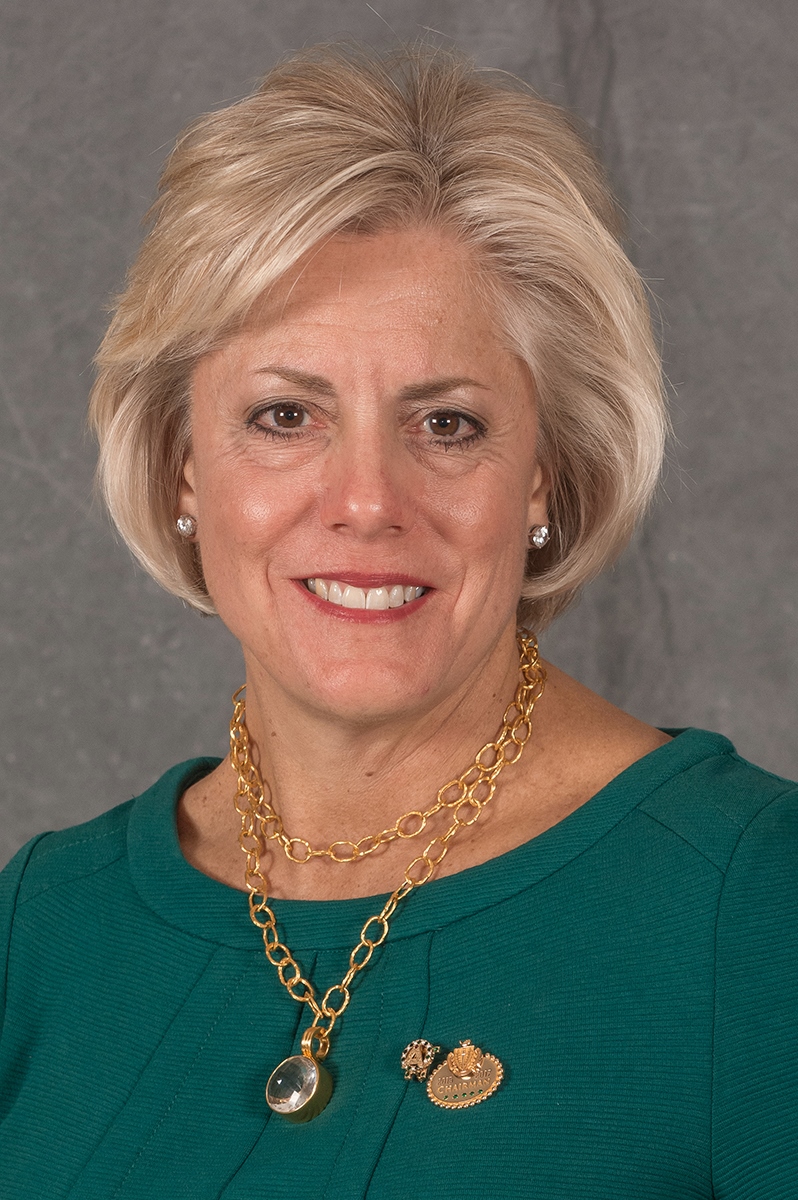
On March 2, I had several places to be during the day and I wondered if people would notice, let alone ask, about the two pieces of jewelry I was wearing. I wore my Alpha Omicron Pi badge on a necklace and my NPC chairman’s badge as a pin. Both represent my lifelong commitment to service, community and sisterhood as a member of Alpha Omicron Pi and the National Panhellenic Conference.


In my conversations, I was able to not only advocate for the sorority experience, but engage in dialogue about Stand Up to Harvard and students’ rights to associate. I had the opportunity to talk about NPC’s work with the Anti-Hazing Coalition and directed the dad to TheSororityLife.com for additional recruitment information and what his daughter could expect as a sorority woman – leadership and volunteer opportunities, friendship for a lifetime, personal development, the importance of philanthropy and much more. It was a really good day!

If you didn’t wear your badge on March 2, I encourage you to join in next year as we show the world we believe in the power of the sorority experience. Or, just pick any day and put yourself out there by wearing your badge to celebrate the history of sororities. Just see how many people ask about your badge, allowing you to tell your sorority story and advocate for the sorority experience.


Panhellenically,


Carole J. Jones
NPC Chairman 

Tuesday, March 13, 2018

Chairman's Message: Celebrating Women's History Month & the Sorority Experience

Celebrated during the month of March in the United States, Women’s History Month traces its beginning back to the first International Women’s Day in 1911. As celebrations of International Women’s Day increased throughout the years, both in public school districts and on college campuses, President Jimmy Carter issued a presidential proclamation in February 1980 declaring the week of March 8,1980, as National Women’s History Week.

Women's History Month is celebrated
in March in the United States
and in October in Canada.

(Graphic source: National Women's History Project)
In 1987, due to the growing popularity of Women’s History Week and after being petitioned by the National Women’s History Project, Congress declared March as National Women’s History Month in perpetuity. Since then, a presidential proclamation is issued every year honoring the achievements of American women. (Note: In Canada, Women’s History Month is celebrated in October to coincide with Persons Day on October 18. It’s also an opportunity to celebrate the achievements of women and girls as trailblazers throughout Canadian history.)

This year’s Women’s History Month theme is “Nevertheless, She Persisted.” Most certainly, I equate this theme with the women of the National Panhellenic Conference. We are persistent as we advocate for the sorority experience and work to preserve the single-sex experience. And we are persistent in ensuring our sorority and fraternity communities stay vibrant and healthy.

Historically, our member organizations have survived two world wars, the Great Depression, drops in enrollment and public criticism of Greek-letter organizations.

In 1961, when negative opinion of social organizations was at its highest, NPC was persistent and adopted a twofold strategy: to reaffirm the constitutional right of fraternities to exist by virtue of freedom of assembly and to make an energetic stance toward re-educating the public about the value of sororities. 

For more than a decade, while many campuses became epicenters of social unrest for reasons that went far beyond the fraternity/sorority system, NPC walked a precise line in asserting the autonomy of its member organizations and maintaining constructive communication with host institutions. One triumph of collective, persistent action was NPC’s lobbying for the continued legality of single-sex status for fraternities and sororities. This status gained partial protection in 1974, when the U.S. Congress passed an exemption to Title IX of the Education Amendment of 1972 to allow colleges and universities to recognize single-sex social organizations.

As new issues continue to arise and our member organizations evolve, new opportunities and challenges are presented that profoundly impact operations and strategy of NPC. We will continue to be persistent by working to protect students’ rights to freely associate with a single-sex organization and preserving the rights of single-sex student organizations—so women can continue to benefit from the sorority experience now and for years to come.

How you can get involved:
  • Use hashtag #HearHerHarvard to help support the women who are persistent in preserving their single-sex experience. 
  • Stay informed on the latest legislation impacting sororities and single-sex organizations by following your member organization and NPC on social media. 
  • When asked by your member organization, reach out to your congressional representatives about legislation designed to protect single-sex organizations at colleges and universities.

Interfraternally,

Carole J. Jones
2017-19 NPC chairman


Thursday, March 8, 2018

2018 Women's History Month: Women of Courage and Conviction - Part 1

Women’s History Month is celebrated each March, and the National Women's History Project has selected "Nevertheless, She Persisted: Honoring Women Who Fight All Forms of Discrimination Against Women” as the 2018 theme.

During Women’s History Month, the National Panhellenic Conference will spotlight of a number of sorority women who have persisted with courage and conviction in their efforts to help end discrimination and break down barriers for other women. This is part one in that series.

Since today, March 8, is also International Women’s Day, which celebrates the social, economic, cultural and political achievement of women, we are pulling from our blog archives to highlight the work of two sorority women who, in their lifetimes, have helped lead the press for progress for women.

Carrie Chapman Catt, Pi Beta Phi

Photo Courtesy of the Wisconsin Historical Society.
In this 1883 portrait, 
Carrie Chapman Catt is proudly
wearing her arrow badge in the style of the day.
“In the adjustment of the new order of things, we women demand an equal voice; we shall accept nothing less.”

Carrie Chapman Catt, a member of Pi Beta Phi, was a notable women’s suffragist and founder of the League of Women Voters. To pay for her education, she worked as a teacher and she was the only woman in her graduating class in 1880. Later on, she became superintendent of schools, becoming one of the first women in the county to be named to such a position. She was involved in advocacy all of her life. In addition to her work at the League of Women Voters, she supported the formation of the United Nations.


Ruth Bader Ginsburg, Alpha Epsilon Phi

Supreme Court Justice
Ruth Bader Ginsburg
“Our goal in the ‘70s was to end the closed door era. There were so many things that were off limits to women: policing, firefighting, mining, piloting planes.”

Justice Ruth Bader Ginsburg, a member of Alpha Epsilon Phi, has served as a United States Supreme Court Justice since 1993. During her time as a law student and professor, she broke many barriers for women. In 1971, she played a major role in the creation of the Women’s Rights Project of the American Civil Liberties Union (ACLU). At the ACLU, she appeared before the U.S. Supreme Court with six landmark cases on gender discrimination. And, in 1999, she received the American Bar Association’s Thurgood Marshall Award for her contributions to gender equality and civil rights.