Showing posts with label Women's History. Show all posts

Monday, August 17, 2020

Remembering Sorority Suffragists

In honor of the centennial celebration of the 19th Amendment, we take a look back at some of the suffragist sorority women who paved the way for the future generations of women*. These 10 sorority women took action to make change and create a platform for women to continue to advocate for women's rights. The women we talk about here are just a fraction of the sorority women who used their voices to effect change and demand women's right to vote. In addition to being advocates for women’s rights, many of them were leaders in the fields of education, government and more. They not only paved the way for women to exercise their right to vote but served as role models for future generations of women. 

https://lh5.googleusercontent.com/PksQLIyyZM7e8eoLFfsT0x_6On-Vg6UuDt2Au4J8Bb_jvi1vCBR5VuOcrYhvCkwyLQNwSun8SmrJEn7BnQym14y7onmDtUhh1k8JJ4RHitWXGodw0M1N1yMrRWLx8kqot2l5-7y5
Photo Source:
Smith.edu

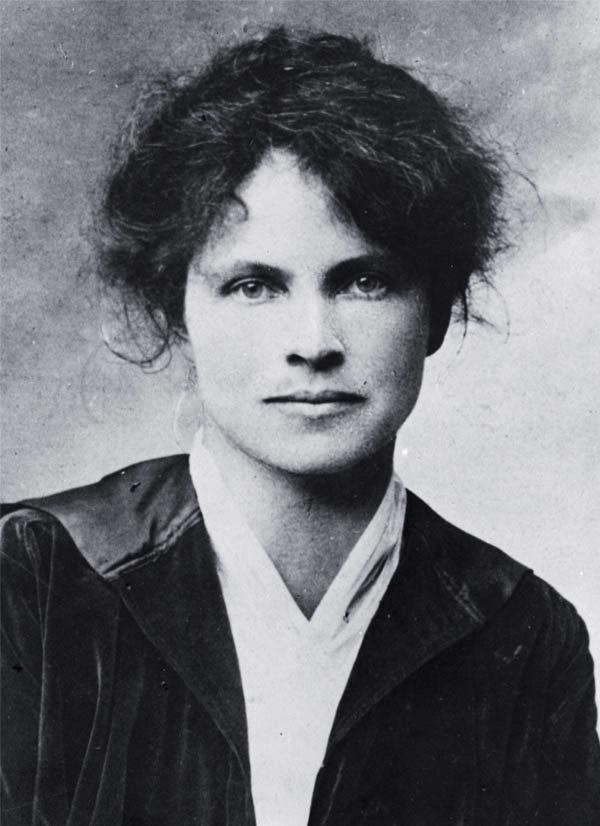
Ada Comstock Notestein

Ada Comstock Notestein, a member of Delta Gamma, was president of the American Association of University Women for two years. She also served as the first dean of women at the University of Minnesota and the first full-time president of Radcliffe College, a position which she held for 20 years. In addition, she convinced Harvard to accept classroom coeducation in 1943. As an advocate for education, Comstock helped hundreds of women earn a bachelor’s degree at Smith College. Part of Ada’s legacy is that she strove to help women in higher education achieve their goals. She now has a scholarship named after her for young college-aged women to achieve those same dreams. 

https://lh4.googleusercontent.com/0QHypH9Q6Wnio-tFMxCLiOdGvtINoQtMuWqGRS8BPChlKlLCwvt-b2X2W2Fh68c6qfq0lXrzvoLGr9jKqoTJ07MANI6HjdhFxG1gOl1nV_iy3bOW18zwQMnTI82YP_zXA6IQanPm
Photo Source:
AliceDuerMiller.com
Alice Duer Miller

Alice Duer Miller was a member of Kappa Kappa Gamma and her writing skills took the suffrage movement by storm. She wrote poetry that had a huge impact on the movement and even wrote a column called, Are Women People? This column became a catchphrase for the suffrage movement. She followed that collection of columns with one called, Women Are People! Her illustrations and written works made her a known activist within the women’s suffrage movement and a pivotal voice in the U.S.

Photo Source:
 NPS.gov


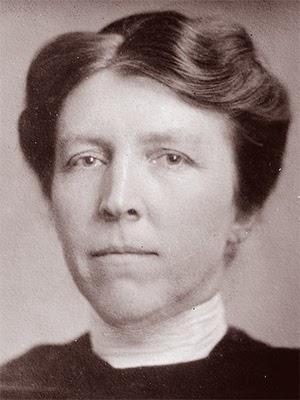
Reverend Doctor Anna Howard Shaw

Reverend Doctor Anna Howard Shaw was a member of Kappa Alpha Theta. Shaw was one of the first female Methodist ministers in the United States. She met Susan B. Anthony in 1888, who encouraged her to join the National American Woman Suffrage Association (NAWSA). Her great work also led her to be the president of the NAWSA, where she and Anthony worked closely together to advocate for women’s rights throughout the movement. She also played a key role in the merging of two suffrage associations and this was the first time in decades that unity between organizations had happened within the suffrage movement.


Carrie Lane Chapman Catt


Photo Source:
Catt.org
Carrie Lane Chapman Catt was a member of Pi Beta Phi and played a large role in the passage of the 19th Amendment and American women’s right to vote. It was Carrie who came up with what was known as the “Winning Plan” that coordinated state suffrage campaigns that lobbied for women’s rights, which helped ensure the development of the constitutional amendment. She helped found the League of Women Voters that gave women a platform and voice on political issues. Carrie was also the president of the National American Woman Suffrage Association from 1900 to 1904 and again from 1915 to 1920. She also wrote about the history of the suffrage movement that was published in 1923 called, Woman Suffrage and Politics: The Inner Story of the Suffrage Movement.


Dorothy Canfield Fisher, Ph.D.

Photo Source:
Franbecque.com


Dorothy Canfield Fisher, Ph.D., was a member of Kappa Kappa Gamma. She was a strong activist and voiced her support for women’s rights, racial equality and lifelong education through her activism. She even enlisted help from her sisters to aid in war-relief in France after World War I. After the war, she was head of the U.S. committee that allowed people to have the option to refuse to perform military service due to the freedom of thought, conscience or religion. Dorothy also worked for years trying to improve education reform and worked closely with the women’s prisons to do so. 


Edith and Grace Abbot
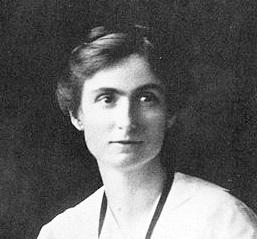

Photo Source:
Geni.com

Edith and Grace Abbott, two sisters who were both members of Delta Gamma and each had a tremendous impact on the suffragist movement. Edith became the first woman to become dean of an American graduate school. She was committed to advocating for social reform and welfare and spent a lot of her time doing so. She and Grace both moved to what was known as the Hull House, which was a community for educated women with scholarly and revolutionary thinking. Grace wrote and published a number of scholarly articles and government reports that contributed to women’s rights. 
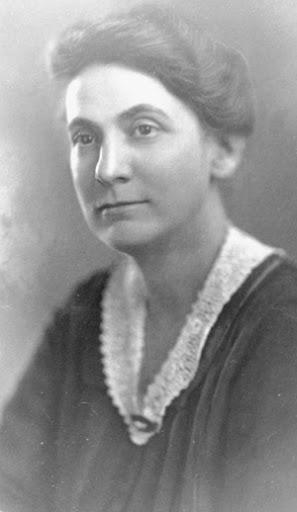

Photo Source:
Plainshumanities.edu
Grace Abbott, like her sister Edith, strove to advocate for women’s rights and improving children’s welfare, especially those who were immigrants. She was also the highest-ranking woman in the U.S. government for over a decade as the head of the U.S. Children’s Bureau. Grace became the first woman to be nominated and to hold a presidential cabinet position for the Secretary of Labor. A lot of her research and works were used in helping to make policies involving child labor laws across the United States.


Photo Source:
Franbecque.com

Eliza Jean Nelson Penfield 


Eliza Jean Nelson Penfield was a member of Kappa Kappa Gamma, who also served as Kappa Kappa Gamma’s president. She worked alongside Carrie Lane Chapman Catt to found the League of Women Voters. But, her push for the 19th Amendment didn’t stop there, as she was one of the seven women who chartered the Woman’s Suffrage Party of Greater New York. 
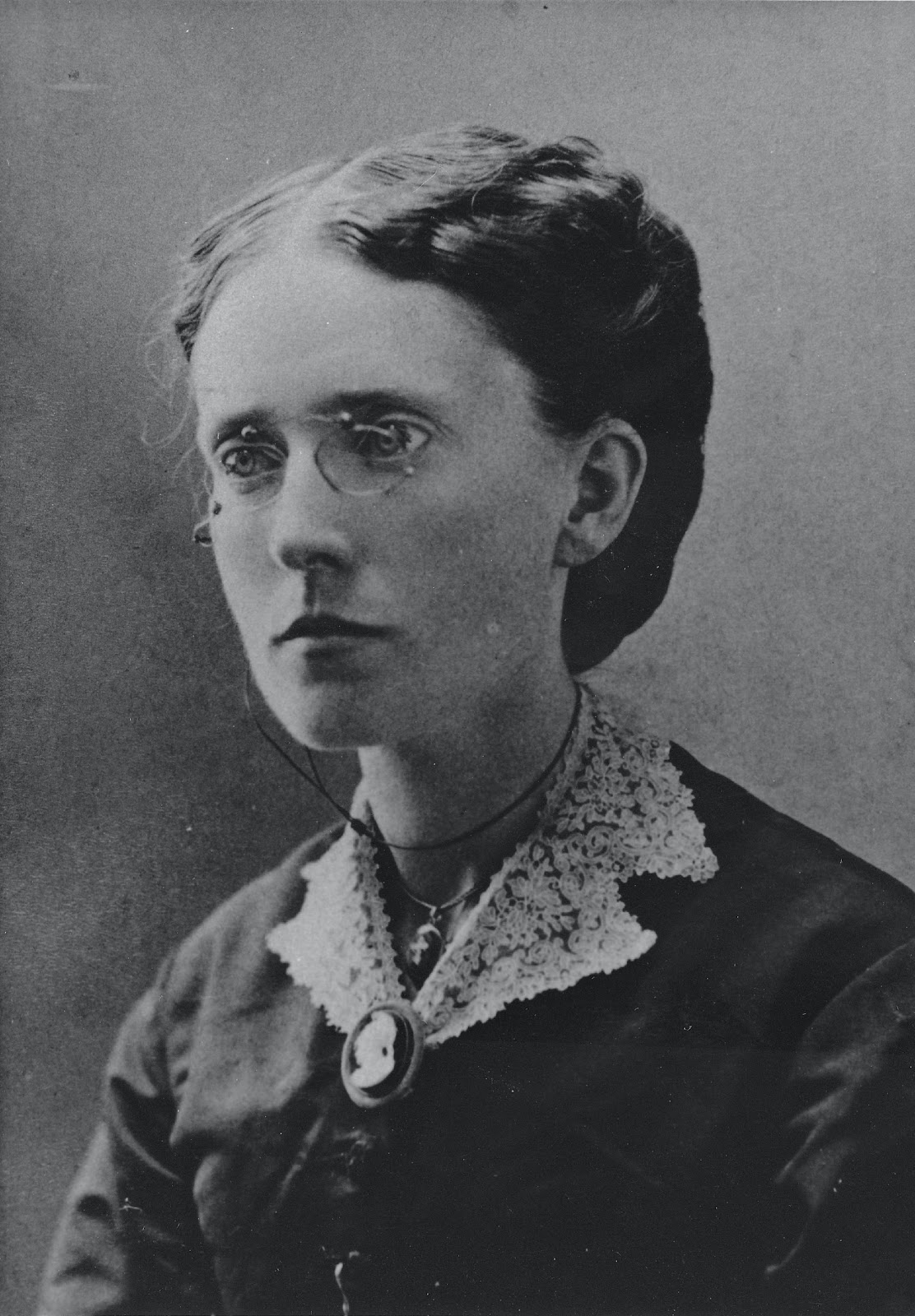


Photo Source:
Franceswillardhouse.org

Frances Willard 

Frances Willard was another suffragist who was a member of Alpha Phi, and like Eliza Jean Nelson Penfield, held the president position. Frances was also the president of the Woman’s Christian Temperance Union (WCTU). Before she was elected president of the WCTU, she became the first corresponding secretary for the organization. She spent endless amounts of her time traveling to speak and give lectures advocating for women’s suffrage and home protection. Frances also helped found the World WCTU in 1888 and became the president just five years later. 


Mary Ritter Beard 


Photo Source:
Franbecque.com

Mary Ritter Beard, who was a member of Kappa Alpha Theta. She was a leader and activist in many areas such as education and women’s rights. Mary was a member of the Women’s Trade Union League, the Equality League of Self-Supporting Women, the New York Suffrage Party and the Wage-Earners’ Suffrage Party. On top of her long list of involvement, she was also on the advisory board of the Congressional Union for Woman Suffrage, also known as the National Women’s Party. 


All of these women and many others made endless contributions towards women’s rights and what led to the 19th Amendment. They created a platform and even used their resources as sorority women to voice their thoughts and make a change in the world. They are an inspiration to women today on how you can make the world a better place, or at least your part of it. 


*The National Panhellenic Conference recognizes the 19th Amendment didn’t expand the right to vote to all women, but as women’s-only organizations we want to highlight the role our members played in the amendment’s passage and acknowledge it was a significant first step for all our members.

Tuesday, February 11, 2020

From the NPC Chairman: Marking the Women’s Suffrage Centennial

Dear friends,

One hundred years ago, on June 4, 1919, the United States Senate voted in favor of the 19th Amendment, following the House of Representative’s passage of it two weeks earlier. This move by Congress laid the foundation for states to begin voting to ratify the amendment, and soon after, several states followed with their support.

However, it wasn’t until 14 months later in August 1920 that the required number of states – three-fourths of them, or 36 states at that time – passed the amendment and it was ratified into the U.S. Constitution.

As part of NPC’s advocacy building blocks for citizenship and service, we will be asking member organizations, College Panhellenics and Alumnae Panhellenics to help NPC mark the Women’s Suffrage Centennial. Now, we realize that the 19th Amendment didn’t automatically create equality for all women and that for these last 100 years many women have continued to challenge privilege granted to others based on ethnicity, race, identity and sexuality. But, as a women’s-only organization, NPC wants to acknowledge that the 19th Amendment was a major first step for all of our members. 

Proudly, many of our members were involved in the efforts that led to the passage of this piece of landmark legislation and so much more to advance a variety of women’s rights. Look for NPC social media posts throughout the year highlighting sorority women suffragists and other key events. In the meantime, keep these dates in mind:

March: Women’s History Month
April 1: FGRC Annual Capitol Hill Visits
Aug. 26: Centennial Anniversary of the 19th Amendment ratification
Sept. 22: National Voter Registration Day
Nov. 3: Election Day

Attendees at the 2020 College Panhellenic Academy had the privilege of kicking off NPC’s year-long efforts during a Women’s Suffrage Centennial Celebration on Jan. 25. Here are a few ideas for you to continue the celebration by engaging in activities that promote citizenship, women’s empowerment and our right to vote: 

  • Host events on campus celebrating Women’s History Month, International Women’s Day (March 8), 50/50 Day (March 31) and more.
  • Share Women’s Vote buttons, which can be purchased from the NPC Store.
  • Promote NPC and TheSororityLife.com social media messages.
  • Celebrate on Aug. 26 when government and recognizable buildings across the United States will glow through the night with purple and gold lights, the traditional colors of the suffrage movement commemorating the actual ratification of the 19th amendment. We encourage you to work with your campuses to light up buildings, such as student unions or your own chapter houses, to commemorate the special day. 

NPC is also working with the Women’s Suffrage Centennial Commission, whose mission is to commemorate and coordinate the nation’s 100th anniversary of the 19th Amendment and to educate the American people about the efforts and undertakings of the women’s suffrage movement in the United States in a bipartisan fashion. A toolkit developed by NPC’s marketing department will soon be shared enabling us all to participate in this landmark celebration.

Panhellenically,


Carole J. Jones
NPC chairman

Thursday, March 22, 2018

2018 Women’s History Month: Women of Courage and Conviction – Part 3

The National Women's History Project’s theme for the 2018 Women’s History Month is “Nevertheless, She Persisted: Honoring Women Who Fight All Forms of Discrimination Against Women.” The National Panhellenic Conference is spotlighting sorority women who have persisted with courage and conviction, particularly in breaking down barriers for other women.

The next sorority woman in our series is both following in the footsteps of other women as well as blazing a trail.

Shaesta Waiz, Theta Phi Alpha, is the youngest woman to fly solo around the world in a single-engine aircraft. She completed her travels in October 2017.

Shaesta Waiz is the first in her family to earn an
undergraduate degree, the first female civilian pilot
from Afghanistan, and the youngest woman to fly
around the world solo in a single-engine plane.

But, her journey has never been easy.

She was born in a refugee camp in Afghanistan. Her parents immigrated to America, where she then grew up in an underprivileged neighborhood in Richmond, California.

To achieve her dream of becoming a pilot, she attended Embry-Riddle Aeronautical University with the help of scholarships and donor support to fund her education.

Geraldine "Jerrie" Fredritz Mock
was the first woman to fly solo
around the world.
In an article in National Geographic, Waiz indicates Jerrie Mock, Phi Mu, the first woman to fly solo around the world – also in a single-engine plane – as her inspiration and mentor.

While Mock’s 1964 journey focused on speed, Waiz had a different mission: to empower women around the world to pursue STEM and aviation careers. Waiz used the stops along her journey to talk to women and children about pursuing their goals.

Waiz also has founded a nonprofit organization called Dreams Soar to help bring awareness of STEM careers and to eventually fund STEM and aviation scholarships for girls and young women. 

Today, only 24 percent of U.S. STEM professionals are female and there are only 450 female airline captains worldwide. Waiz hopes to change that.

As Waiz told the BBC during her trip around the world, her message is that you can be “from any background, you can have any set of challenges but what’s really important is that you have to dream, to dream big and work hard and go after it.”

Sources: Theta Phi Alpha, Phi Mu, Dreams Soar, BBC, National Geographic

See also: 

Thursday, March 15, 2018

2018 Women’s History Month: Women of Courage and Conviction – Part 2


The National Women's History Project’s theme for the 2018 Women’s History Month is “Nevertheless, She Persisted: Honoring Women Who Fight All Forms of Discrimination Against Women.” The National Panhellenic Conference is spotlighting sorority women who have persisted with courage and conviction in their efforts to help end discrimination and break down barriers for other women.

Brig. Gen. Margaret A. Brewer
United States Marine Corps

The next woman to be highlighted in this blog series is Margaret A. Brewer, an alumna of Zeta Tau Alpha at the University of Michigan. Brewer was the first female general officer in the United States Marine Corps.

After her college graduation in 1952, Brewer joined the Marine Corps, serving at a time when few women were Marines. She held a variety of roles in the Marine Corps, including rising to the rank of colonel in 1970 and serving as director of women from 1973-1977.


She then served as deputy director of the information division for the Marine Corps. When she was nominated in 1978 to lead the division, the director position was required to be a general – a role not available to women Marines at that time.

President Jimmy Carter made a special appointment to promote Brewer to brigadier general and it was approved by both houses of Congress. Under her leadership, the department was reorganized into the Division of Public Affairs.

Brewer was honored with the Outstanding Achievement Award from the University of Michigan in 1979 and two Legion of Merit awards from the Marine Corps. She received Zeta Tau Alpha’s Outstanding Alumna Award in 1984.

Brewer retired from the Marine Corps in 1980 and passed away in 2013 at the age of 82. In her obituary in The Washington Post, Brewer is described as “legendary” and “one of the pioneers.” Marine Corps Commandant Gen. James Amos said in a statement to the paper: “She served during an era when many thought that women had no place in the Corps, but she proved critics wrong time and again.”

Sources: Zeta Tau Alpha, The Washington Post


Thursday, March 8, 2018

2018 Women's History Month: Women of Courage and Conviction - Part 1

Women’s History Month is celebrated each March, and the National Women's History Project has selected "Nevertheless, She Persisted: Honoring Women Who Fight All Forms of Discrimination Against Women” as the 2018 theme.

During Women’s History Month, the National Panhellenic Conference will spotlight of a number of sorority women who have persisted with courage and conviction in their efforts to help end discrimination and break down barriers for other women. This is part one in that series.

Since today, March 8, is also International Women’s Day, which celebrates the social, economic, cultural and political achievement of women, we are pulling from our blog archives to highlight the work of two sorority women who, in their lifetimes, have helped lead the press for progress for women.

Carrie Chapman Catt, Pi Beta Phi

Photo Courtesy of the Wisconsin Historical Society.
In this 1883 portrait, 
Carrie Chapman Catt is proudly
wearing her arrow badge in the style of the day.
“In the adjustment of the new order of things, we women demand an equal voice; we shall accept nothing less.”

Carrie Chapman Catt, a member of Pi Beta Phi, was a notable women’s suffragist and founder of the League of Women Voters. To pay for her education, she worked as a teacher and she was the only woman in her graduating class in 1880. Later on, she became superintendent of schools, becoming one of the first women in the county to be named to such a position. She was involved in advocacy all of her life. In addition to her work at the League of Women Voters, she supported the formation of the United Nations.


Ruth Bader Ginsburg, Alpha Epsilon Phi

Supreme Court Justice
Ruth Bader Ginsburg
Our goal in the ‘70s was to end the closed door era. There were so many things that were off limits to women: policing, firefighting, mining, piloting planes.”

Justice Ruth Bader Ginsburg, a member of Alpha Epsilon Phi, has served as a United States Supreme Court Justice since 1993. During her time as a law student and professor, she broke many barriers for women. In 1971, she played a major role in the creation of the Women’s Rights Project of the American Civil Liberties Union (ACLU). At the ACLU, she appeared before the U.S. Supreme Court with six landmark cases on gender discrimination. And, in 1999, she received the American Bar Association’s Thurgood Marshall Award for her contributions to gender equality and civil rights.


Tuesday, February 13, 2018

Getting to 50/50

Vision 2020, headquartered in Philadelphia at Drexel University’s Institute for Women’s Health and Leadership, is a national coalition advocating for women’s economic, political and social equality in the United States. In 2011, the National Panhellenic Conference became a Vision 2020 National Ally. Since then, we have been supporting the work of the Vision 2020 staff to make equality a national priority through shared leadership among women and men with an initial focus on business and government, where decisions are made, policies set and resources allocated.

The national goals of Vision 2020’s Campaign for Equality are:

• Shared Leadership: Increase the number of women in senior leadership positions to achieve 50/50 representation of women and men by 2020 in targeted areas.
• Economic Security: Achieve pay equity and advance women’s economic security throughout their lives.
• Education: Educate young people to value women’s achievements, gender equality, shared leadership and civic engagement.
• Civic Engagement: Engage and educate women voters and increase women’s participation in the political process.

As part of the campaign efforts, Vision 2020 has joined forces with the organizing team at Let It Ripple, a California-based film studio that produces mini-documentaries often focused on social justice issues.

In May 2017, Vision 2020 held a 50/50 Day event in Philadelphia that focused on gender equality and included a screening of a short film from Let It Ripple. Through the organizers’ grassroots efforts, more than 10,000 individual events also were held across the U.S. and in 60 countries. Events were held from Times Square to Kenya – all viewing the same film at the same time. The first event also included coverage on the Times Square billboard, ABC News, NPR, Variety, Bloomberg and Time Magazine. What a powerful statement that makes! 

Early success of the film's screening inspired organizers at Vision 2020 to plan a second 50/50 Day event for April 26, 2018. As a National Ally, NPC is encouraging College and Alumnae Panhellenics to watch the 20-minute film followed by a facilitated reflection and discussion using the questions found here.


Sorority women can also join the conversation through the 50/50 Day social media campaign. I encourage you to write down your answer to this question, “In six words, what does a gender-balanced world look like to you?” With these six words in hand, take a selfie with your written answer and post it to Facebook, Twitter and Instagram with the hashtag #Gettingto5050. If you also tag @npcwomen, we’ll be able to share your posts too.

In January, at NPC’s College Panhellenic Academy, participants had the opportunity to view the 20-minute film. As I was walking out of the room with the young women and fraternity/sorority advisors, the comments I heard included: Powerful ... Emotional ... What a great film ... Why didn’t we know about 50/50 Day?

I asked a group of students, “What are your take-aways from the film?” Their responses included: We need to tell a new story of abundance … Female leaders go all the way back to the Roman Empire in A.D. 60 or 61 … Having a mentor makes a difference in the push to success.

Join me and thousands of other men and women as we rethink the past, present and future of women in leadership. The short film can be viewed here. If your College or Alumnae Panhellenic would like to sign up to host a 50/50 Day event in 2018, you can do so here.

Interfraternally,

Carole J. Jones
NPC Chairman 2017-19

Thursday, March 30, 2017

I Wear a Badge: Susan Shannon Engeleiter, Delta Gamma

The theme for Women’s History Month in 2017 is “Honoring Trailblazing Women in Business and Labor.” Throughout March, we’ll be sharing the stories of sorority women who made history in these areas. The efforts of these sorority women advance the cause of all women, and we are grateful for their efforts.

From Data Recognition Corporation (credit)
Meet Susan Shannon Engeleiter: CEO of Data Recognition Corporation (DRC), first woman to hold the position of administrator of the U.S. Small Business Administration, and a proud sorority woman.

Engeleiter was initiated into the Omega chapter of Delta Gamma at the University of Wisconsin – Madison in 1970 where she studied English and communications. She later earned a Juris Doctor from the University of Wisconsin Law School.

After completing her law degree, Engeleiter entered politics and became the youngest woman, at age 22, to ever have been elected to serve in a state legislature in the United States. She was elected to the Wisconsin State Senate in 1980, where she served as the assistant minority leader from 1982-84, and as minority leader from 1984-89. Engeleiter ran for a U.S. Senate seat in 1988, but was defeated by a narrow margin.

In 1989, President George H.W. Bush nominated her as the administrator of the Small Business Administration. She was the first woman in history to hold this title, and served in the position until 1991. During her term as administrator, Engeleiter was also appointed chairwoman of the National Women’s Business Council. From 1991-96 she served on the President’s Export Council.

She worked for Honeywell International Inc. as the vice president of government affairs leading the Honeywell Home and Business Control business and working on legislative and regulatory initiatives to support the organization’s goals. Engeleiter joined DRC as the president and chief operating officer in 1998, and was promoted to her current role as CEO and president of the company in 2006. As the leader of DRC she manages 12 locations, 650 full-time employees and 5,000 seasonal employees who provide education, survey and document services to clients throughout the U.S.

References:
  • Data Recognition Corporation (n.d.) Susan Shannon Engeleiter. Retrieved from http://www.datarecognitioncorp.com/Pages/Leadership%20Bios/Susan-Engeleiter.aspx
  • Data Recognition Corporation (2006, December 11). DRC names Susan Engeleiter chief executive officer and president. [Press release]. Retrieved from http://www.prnewswire.com/news-releases/drc-names-susan-engeleiter-chief-executive-officer-and-president-56108012.html
  • Executive profile: Susan Shannon Engeleiter. (n.d.) Bloomberg. Retrieved from http://www.bloomberg.com/research/stocks/private/person.asp?personId=12736233&privcapId=4299160&previousCapId=4299160&previousTitle=Data%20Recognition%20
    Corporation
  • Susan Engeleiter. (n.d.). In Wikipedia. Retrieved March 1, 2017, from https://en.wikipedia.org/wiki/Susan_Engeleiter

Thursday, March 23, 2017

I Wear a Badge: Sara Blakely, Delta Delta Delta

The theme for Women’s History Month in 2017 is “Honoring Trailblazing Women in Business and Labor.” Throughout March, we’ll be sharing the stories of sorority women who made history in these areas. The efforts of these sorority women advance the cause of all women, and we are grateful for their efforts.
From Sara's Notebook (credit)

Meet the youngest self-made female billionaire in America: Sorority woman Sara Blakely.

Blakely is the founder and sole owner of Spanx, a shapewear company that has taken the world by storm in the past two decades. She is also a member of Delta Delta Delta from Florida State University.

Blakely’s journey is unlike many other entrepreneurs. She credits failure for propelling her to the top of her industry. Every week at dinner growing up, Blakely’s father would ask her and her brother, “What did you fail at this week?” They would rejoice and celebrate her failures. She said in an interview with CNBC that, “The gift he was giving me is that failure is when you are not trying. Failure is not the outcome. It's really allowed me to be much freer in trying things and spreading my wings in life."

Growing up, Blakely had always dreamed of being a lawyer, but failed the entrance exams: not once, but twice. She then worked in sales selling fax machines. Spanx was born when she saw a need for comfortable shapewear that fit the modern woman’s needs.

Blakely had never taken a business class, had no training, no retail experience and was entering a steadily declining market. Regardless, she was driven by a purpose and a cause she believed in; one she knew would help make a difference in the lives of women. And, she was guided by the principle that even if she failed, she had tried and she could learn and grow from it.

Today, Blakely speaks often about her experience and why we should not fear failure; rather we should celebrate it. And, the value of philanthropy instilled through her sorority experience is still near and dear to her heart. She created the Sara Blakely Foundation to donate millions to charities around the world, focusing on those that empower underserved women and girls. Additionally, in 2013, she signed the Giving Pledge to donate at least half her wealth to charity.

Resources:
  • Caprino, K. (2012, May 23). 10 lessons I learned from Sara Blakely that you won’t hear in business school. Forbes. Retrieved from https://www.forbes.com/sites/kathycaprino/2012/05/23/10-lessons-i-learned-from-sara-blakely-that-you-wont-hear-in-business-school/#7277a9831438
  • Frank, R. (2013, October 16). Billionaire Sara Blakely says secret to success is failure. CNBC. Retrieved from http://www.cnbc.com/2013/10/16/billionaire-sara-blakely-says-secret-to-success-is-failure.html
  • Kimball, D. (2015, July 26). Sara Blakely: The college years. [Web log]. Retrieved from http://www.darrylkimball.net/darrylkimballblog/2015/7/26/sara-blakely-the-college-years
  • Turtis, M. (2012, March 15). Sara Blakely: 9 things you don’t know about Spanx founder, and youngest Forbes billionaire. Glamour. Retrieved from http://www.glamour.com/story/sarah-blakely-9-things-you-don

Thursday, March 16, 2017

I Wear a Badge: Bessie Margolin, Alpha Epsilon Phi

From U.S. Department of Labor (credit)
The theme for Women’s History Month in 2017 is “Honoring Trailblazing Women in Business and Labor.” Throughout March, we’ll be sharing the stories of sorority women who made history in these areas. The efforts of these sorority women advance the cause of all women, and we are grateful for their efforts.

Labor law trailblazer Bessie Margolin was born in Brooklyn, New York, in 1909 to Russian, Jewish immigrants. Change came quickly to Margolin at a young age; at the age of two, her family moved to Tennessee and then her mother died. Shortly after, she and her brother were sent to live at the Jewish Children’s Home in New Orleans.

She received a bachelor’s degree from Newcomb College in 1929, a women’s college and affiliate of Tulane University, where she became a member of Alpha Epsilon Phi. After earning a law degree from Tulane, she went on to get a doctorate in law from Yale University in 1933.

At this time, law firms didn’t hire female attorneys, so Margolin turned to the government. She began working for the Tennessee Valley Authority, a government-owned corporation providing electric utilities to the Tennessee Valley region.

During her time at the TVA, she worked as a research attorney, an associate attorney and eventually was promoted to senior attorney after having organized evidence, researched legal issues and written briefs for two cases that were seen by United States Supreme Court.

Margolin left the TVA for the U.S. Department of Labor in 1939 and after learning the ins and outs of the Fair Labor Standards Act, she was promoted to assistant solicitor in charge of Supreme Court appellate litigation.

Following World War II, Margolin worked for the U.S. Department of War during the Nuremburg Trials, drafting original regulation for the military tribunals.

By the 1960s, Margolin had garnered enough acclaim to be recommended to President Lyndon B. Johnson for appointment to the U.S. Court of Claims. In 1966, Margolin assisted in the founding of the National Organization for Women, nicknamed NOW.

She retired in 1972 having argued 24 cases in front of the Supreme Court and winning 21 of them. Following her retirement, Margolin served as an arbitrator and occasionally taught at George Washington University. She died in Virginia on June 19, 1996.

Margolin was known for her independence and intelligence in a field dominated by men. Marlene Trestman, author of “Fair Labor Lawyer: The Remarkable Life of New Deal Attorney and Supreme Court Advocate Bessie Margolin” said, “[she] played the woman card because it was the only one she was dealt.” Instead of allowing her femininity to be a chip on the shoulder of her career, Margolin used her status as a strong woman to blaze a trail for other women to follow in her footsteps.

Resources: 
  • Earnst, D. (2013, May 22). Bessie Margolin (1909-1996). Legal History Blog [Web log]. Retrieved from http://legalhistoryblog.blogspot.com/2013/05/bessie-margolin-1909-1996.html.
  • Book, B. (2016, August 31). Breaking glass ceilings: Bessie Margolin and “the woman card.” Jewesses with Attitude [Web log]. Retrieved from https://jwa.org/blog/breaking-glass-ceilings-bessie-margolin-and-woman-card.

Tuesday, March 14, 2017

Message From the Chairman: Blazing a Trail — Women in the Business of Sports

My daughter was a competitive rower; a grueling, exhaustive mental and physical sport. Rowing ... not for the weak hearted! The lessons she learned in a sport dependent on building a strong team and pushing oneself to physical limits included determination, patience, diplomacy, strategy and self-belief. She and thousands of other young women benefit daily from the skills developed through sports, which follow them into college and careers.

The theme of Women’s History Month is “Honoring Trailblazing Women in Business and Labor.” Countless women, like the founders of the 26 National Panhellenic Conference (NPC) inter/national sororities, have faced what might seem like insurmountable challenges. In sports, consider the benefits of athletics and the obstacles women face. We’d like to honor them too. Their stories also feature unceasing determination, breaking glass ceilings, realizing success and continuously blazing trails.

Please take time to read about them:
  • Erin Andrews, Zeta Tau Alpha, Fox Sports™ reporter
  • Lin Dunn, Chi Omega, University of Kentucky Women's Basketball assistant coach, Women’s Basketball Hall of Fame member 
  • Mary Ellen Gillespie, Alpha Phi, director of athletics, University of Wisconsin-Green Bay  
  • Charlotte Jones Anderson, Kappa Kappa Gamma, executive vice president/chief brand officer, Dallas Cowboys
  • Condoleezza Rice, Alpha Chi Omega, former U.S. secretary of state, member of the College Football Playoff selection committee
Trailblazing has shaped women’s actions for generations. Through these stories and other female trailblazers in the business of sports, lessons learned on and off the field parallel the sorority membership experience. Building character, confidence, self-esteem, scholarly success, a service heart and leadership skills are at the core of the membership experience. Challenging young women to be trailblazers in their communities and careers defines the “business of sorority.”

NPC salutes and celebrates all women who are “trailblazers” during the month of March and beyond! Learn about more history-making sorority women on the #Iwearabadge Pinterest board.

https://www.pinterest.com/npcwomen/i-wear-a-badge/
Interfraternally,

Donna C. King
Chairman 2015-17