Showing posts with label women's suffrage centennial. Show all posts

Tuesday, March 9, 2021

From the NPC Chairman: Honoring strong, valiant women

Dear friends,

Celebrated during the month of March in the U.S., National Women’s History Month traces its beginning back to the first International Women’s Day in 1911. As celebrations of International Women’s Day increased throughout the years, both in public school districts and on college campuses, President Jimmy Carter issued a presidential proclamation in February 1980 declaring the week of March 8, 1980, as National Women’s History Week. 

In 1987, due to the growing popularity of Women’s History Week and after being petitioned by the National Women’s History Project, Congress declared March as National Women’s History Month in perpetuity. Since then, a special presidential proclamation is issued every year honoring the achievements of American women.

In Canada, Women’s History Month is celebrated in October to coincide with Persons Day on Oct. 18. It’s also an opportunity to celebrate the achievements of women and girls as trailblazers throughout Canadian history.

This year’s National Women’s History Month theme is “Valiant Women of the Vote: Refusing to be Silenced.” Honoring the valiant women who have fought for a woman's right to vote in the U.S., the theme is being carried over from 2020 and captures the spirit of these challenging times. Since most 2020 women’s suffrage centennial celebrations were curtailed, the National Women’s History Alliance extended the annual theme to 2021.

Most certainly, I equate this theme with the women of the National Panhellenic Conference, who are also valiant as we tirelessly advocate for the sorority experience and work to preserve the women's-only experience. We are persistent in ensuring our sorority and fraternity communities stay vibrant and healthy, and we refuse to be silent when our rights to sisterhood are threatened.

As you know, sisterhood is the foundation of sorority, literally and figuratively. When the first sorority was founded on a college campus more than 150 years ago, women were overwhelmingly outnumbered by their male peers. Sororities provided a crucial support system in environments that were anything but welcoming. Women have largely triumphed over these early obstacles, now surpassing men in college enrollment and achieving higher graduation rates, but it doesn’t mean that women don’t still need their own spaces on college campuses…spaces that allow women to support each other.

Today, our sororities typically provide the only student-organized women’s-only safe spaces on campus…spaces that allow women to empower and to advocate for one another. We know these spaces are sorely needed on campus and within society. Prior to the onset of the pandemic, we saw the rise of women’s-only co-working spaces and empowerment zones for women entrepreneurs. These are the type of spaces so many women look for to help them flourish.

And we know that college-going women are looking for this type of experience…a sisterhood and a shared experience. 

As we find ways to celebrate Women’s History Month, we will continue to focus on the future of sorority and preserving the experience while at the same time adapting and evolving to meet the needs of our members in this ever-changing world. As sorority women we will be strong and valiant in our efforts to keep our sisterhoods thriving and to advance the sorority experience together.​

Panhellenically,


Carole J. Jones
NPC chairman


Tuesday, October 13, 2020

From the NPC Chairman: Honoring 'Votes for Women' By Exercising Your Right to Vote

Dear friends,

Aug. 26, 2020, marked 100 years since the declaration of the ratification of the 19th Amendment to the U.S. Constitution granting American women the right to vote – a right known as women’s suffrage. The women’s suffrage movement began in 1848, and for the next 72 years, women fought diligently to secure the right to vote. It is these women – including Panhellenic sorority women Carrie Chapman Catt, Alice Duer Miller, the Rev. Dr. Anna Howard Shaw, among others – who rallied for "Votes for Women" and we have them to thank for expanding women’s rights and creating opportunities for future generations.

At the heart of democracy is the right to vote, and generally speaking, most of us take our voting rights seriously and cast our ballot on election day. It’s part of our duty as community citizens and every vote really does count. If you aren’t registered to vote, this is a reminder that the National Panhellenic Conference (NPC) supports and encourages not only our members but all women to pursue economic, social and political equity, along with leadership and civic engagement.

One of NPC’s six advocacy building blocks is citizenship/service showing that Panhellenic women are committed to participating as active citizens to improve both campus and local/state/federal communities. Our goal is to instill the understanding and value that good citizenship is important for caring for others, respecting the law and improving community, and that volunteering teaches women of all ages compassion and understanding. Both citizenship and service ultimately advocate for the causes which we are each personally passionate about. By participating in the democratic process, we are helping to shape the world in which we want to live.

Register and make your plan to vote.

Record turnout at the polls is expected this year in the U.S., and the generational shift of eligible voters continues. According to a study by Pew Research, the youngest Americans – millennials (born 1977-1995) and Generation Z (born 1996-TBD) – will be poised to exercise their political muscle in November, making up 37% of the electorate. Generation X (born 1965-1976) makes up 25% of the electorate. Also, Gen Z is set to surpass the Silent Generation (born 1945 and before) in the size of the electorate for the first time and Baby Boomers (born 1946-1964) remain the generation with the largest share of the voting-eligible population. Interestingly, millennials will make up a smaller share of the electorate than they did in the last presidential election, even as their population numbers have grown due to immigration.

Women continue to have the power to make a difference through their votes in 2020. The collective power of women's voices and votes can and will affect outcomes in our communities and at the national level. I encourage you to become an educated voter, exercise your power and encourage other women to register to vote if they have not done so. Let’s do our part and honor those women who came before us who fought for the rights and privileges of which we enjoy today.

Panhellenically,


Carole J. Jones
NPC chairman

Monday, August 17, 2020

Remembering Sorority Suffragists

In honor of the centennial celebration of the 19th Amendment, we take a look back at some of the suffragist sorority women who paved the way for the future generations of women*. These 10 sorority women took action to make change and create a platform for women to continue to advocate for women's rights. The women we talk about here are just a fraction of the sorority women who used their voices to effect change and demand women's right to vote. In addition to being advocates for women’s rights, many of them were leaders in the fields of education, government and more. They not only paved the way for women to exercise their right to vote but served as role models for future generations of women. 

https://lh5.googleusercontent.com/PksQLIyyZM7e8eoLFfsT0x_6On-Vg6UuDt2Au4J8Bb_jvi1vCBR5VuOcrYhvCkwyLQNwSun8SmrJEn7BnQym14y7onmDtUhh1k8JJ4RHitWXGodw0M1N1yMrRWLx8kqot2l5-7y5
Photo Source:
Smith.edu

Ada Comstock Notestein

Ada Comstock Notestein, a member of Delta Gamma, was president of the American Association of University Women for two years. She also served as the first dean of women at the University of Minnesota and the first full-time president of Radcliffe College, a position which she held for 20 years. In addition, she convinced Harvard to accept classroom coeducation in 1943. As an advocate for education, Comstock helped hundreds of women earn a bachelor’s degree at Smith College. Part of Ada’s legacy is that she strove to help women in higher education achieve their goals. She now has a scholarship named after her for young college-aged women to achieve those same dreams. 


https://lh4.googleusercontent.com/0QHypH9Q6Wnio-tFMxCLiOdGvtINoQtMuWqGRS8BPChlKlLCwvt-b2X2W2Fh68c6qfq0lXrzvoLGr9jKqoTJ07MANI6HjdhFxG1gOl1nV_iy3bOW18zwQMnTI82YP_zXA6IQanPm
Photo Source:
AliceDuerMiller.com
Alice Duer Miller

Alice Duer Miller was a member of Kappa Kappa Gamma and her writing skills took the suffrage movement by storm. She wrote poetry that had a huge impact on the movement and even wrote a column called, Are Women People? This column became a catchphrase for the suffrage movement. She followed that collection of columns with one called, Women Are People! Her illustrations and written works made her a known activist within the women’s suffrage movement and a pivotal voice in the U.S.

Photo Source:
 NPS.gov


Reverend Doctor Anna Howard Shaw

Reverend Doctor Anna Howard Shaw was a member of Kappa Alpha Theta. Shaw was one of the first female Methodist ministers in the United States. She met Susan B. Anthony in 1888, who encouraged her to join the National American Woman Suffrage Association (NAWSA). Her great work also led her to be the president of the NAWSA, where she and Anthony worked closely together to advocate for women’s rights throughout the movement. She also played a key role in the merging of two suffrage associations and this was the first time in decades that unity between organizations had happened within the suffrage movement.


Carrie Lane Chapman Catt


Photo Source:
Catt.org
Carrie Lane Chapman Catt was a member of Pi Beta Phi and played a large role in the passage of the 19th Amendment and American women’s right to vote. It was Carrie who came up with what was known as the “Winning Plan” that coordinated state suffrage campaigns that lobbied for women’s rights, which helped ensure the development of the constitutional amendment. She helped found the League of Women Voters that gave women a platform and voice on political issues. Carrie was also the president of the National American Woman Suffrage Association from 1900 to 1904 and again from 1915 to 1920. She also wrote about the history of the suffrage movement that was published in 1923 called, Woman Suffrage and Politics: The Inner Story of the Suffrage Movement.


Dorothy Canfield Fisher, Ph.D.

Photo Source:
Franbecque.com


Dorothy Canfield Fisher, Ph.D., was a member of Kappa Kappa Gamma. She was a strong activist and voiced her support for women’s rights, racial equality and lifelong education through her activism. She even enlisted help from her sisters to aid in war-relief in France after World War I. After the war, she was head of the U.S. committee that allowed people to have the option to refuse to perform military service due to the freedom of thought, conscience or religion. Dorothy also worked for years trying to improve education reform and worked closely with the women’s prisons to do so. 


Edith and Grace Abbot


Photo Source:
Geni.com

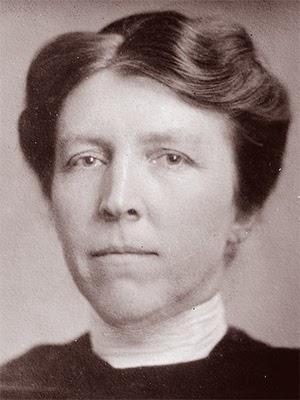
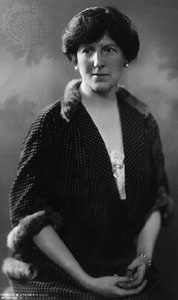
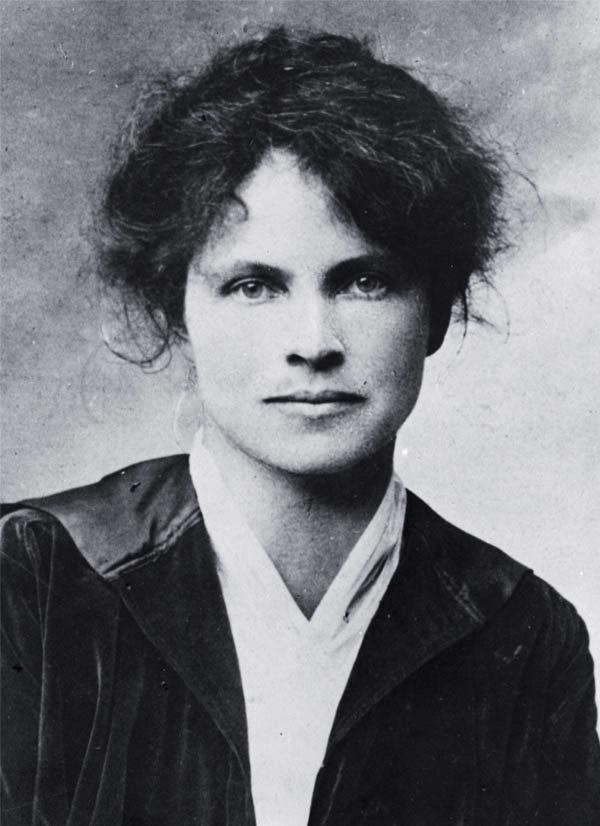
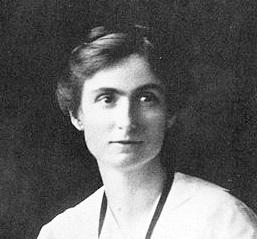
Edith and Grace Abbott, two sisters who were both members of Delta Gamma and each had a tremendous impact on the suffragist movement. Edith became the first woman to become dean of an American graduate school. She was committed to advocating for social reform and welfare and spent a lot of her time doing so. She and Grace both moved to what was known as the Hull House, which was a community for educated women with scholarly and revolutionary thinking. Grace wrote and published a number of scholarly articles and government reports that contributed to women’s rights. 


Photo Source:
Plainshumanities.edu
Grace Abbott, like her sister Edith, strove to advocate for women’s rights and improving children’s welfare, especially those who were immigrants. She was also the highest-ranking woman in the U.S. government for over a decade as the head of the U.S. Children’s Bureau. Grace became the first woman to be nominated and to hold a presidential cabinet position for the Secretary of Labor. A lot of her research and works were used in helping to make policies involving child labor laws across the United States.


Photo Source:
Franbecque.com

Eliza Jean Nelson Penfield 


Eliza Jean Nelson Penfield was a member of Kappa Kappa Gamma, who also served as Kappa Kappa Gamma’s president. She worked alongside Carrie Lane Chapman Catt to found the League of Women Voters. But, her push for the 19th Amendment didn’t stop there, as she was one of the seven women who chartered the Woman’s Suffrage Party of Greater New York. 


Photo Source:
Franceswillardhouse.org

Frances Willard 

Frances Willard was another suffragist who was a member of Alpha Phi, and like Eliza Jean Nelson Penfield, held the president position. Frances was also the president of the Woman’s Christian Temperance Union (WCTU). Before she was elected president of the WCTU, she became the first corresponding secretary for the organization. She spent endless amounts of her time traveling to speak and give lectures advocating for women’s suffrage and home protection. Frances also helped found the World WCTU in 1888 and became the president just five years later. 


Mary Ritter Beard 


Photo Source:
Franbecque.com

Mary Ritter Beard, who was a member of Kappa Alpha Theta. She was a leader and activist in many areas such as education and women’s rights. Mary was a member of the Women’s Trade Union League, the Equality League of Self-Supporting Women, the New York Suffrage Party and the Wage-Earners’ Suffrage Party. On top of her long list of involvement, she was also on the advisory board of the Congressional Union for Woman Suffrage, also known as the National Women’s Party. 


All of these women and many others made endless contributions towards women’s rights and what led to the 19th Amendment. They created a platform and even used their resources as sorority women to voice their thoughts and make a change in the world. They are an inspiration to women today on how you can make the world a better place, or at least your part of it. 


*The National Panhellenic Conference recognizes the 19th Amendment didn’t expand the right to vote to all women, but as women’s-only organizations we want to highlight the role our members played in the amendment’s passage and acknowledge it was a significant first step for all our members.

Tuesday, February 11, 2020

From the NPC Chairman: Marking the Women’s Suffrage Centennial

Dear friends,

One hundred years ago, on June 4, 1919, the United States Senate voted in favor of the 19th Amendment, following the House of Representative’s passage of it two weeks earlier. This move by Congress laid the foundation for states to begin voting to ratify the amendment, and soon after, several states followed with their support.

However, it wasn’t until 14 months later in August 1920 that the required number of states – three-fourths of them, or 36 states at that time – passed the amendment and it was ratified into the U.S. Constitution.

As part of NPC’s advocacy building blocks for citizenship and service, we will be asking member organizations, College Panhellenics and Alumnae Panhellenics to help NPC mark the Women’s Suffrage Centennial. Now, we realize that the 19th Amendment didn’t automatically create equality for all women and that for these last 100 years many women have continued to challenge privilege granted to others based on ethnicity, race, identity and sexuality. But, as a women’s-only organization, NPC wants to acknowledge that the 19th Amendment was a major first step for all of our members. 

Proudly, many of our members were involved in the efforts that led to the passage of this piece of landmark legislation and so much more to advance a variety of women’s rights. Look for NPC social media posts throughout the year highlighting sorority women suffragists and other key events. In the meantime, keep these dates in mind:

March: Women’s History Month
April 1: FGRC Annual Capitol Hill Visits
Aug. 26: Centennial Anniversary of the 19th Amendment ratification
Sept. 22: National Voter Registration Day
Nov. 3: Election Day

Attendees at the 2020 College Panhellenic Academy had the privilege of kicking off NPC’s year-long efforts during a Women’s Suffrage Centennial Celebration on Jan. 25. Here are a few ideas for you to continue the celebration by engaging in activities that promote citizenship, women’s empowerment and our right to vote: 

  • Host events on campus celebrating Women’s History Month, International Women’s Day (March 8), 50/50 Day (March 31) and more.
  • Share Women’s Vote buttons, which can be purchased from the NPC Store.
  • Promote NPC and TheSororityLife.com social media messages.
  • Celebrate on Aug. 26 when government and recognizable buildings across the United States will glow through the night with purple and gold lights, the traditional colors of the suffrage movement commemorating the actual ratification of the 19th amendment. We encourage you to work with your campuses to light up buildings, such as student unions or your own chapter houses, to commemorate the special day. 

NPC is also working with the Women’s Suffrage Centennial Commission, whose mission is to commemorate and coordinate the nation’s 100th anniversary of the 19th Amendment and to educate the American people about the efforts and undertakings of the women’s suffrage movement in the United States in a bipartisan fashion. A toolkit developed by NPC’s marketing department will soon be shared enabling us all to participate in this landmark celebration.

Panhellenically,


Carole J. Jones
NPC chairman