Tuesday, October 20, 2020

How We Transitioned to a Virtual Recruitment at the University of Minnesota Duluth

 The following is a guest post from Annabelle Paquin, the University of Minnesota Duluth, class of 2021. 


When we got the news that recruitment was going to be entirely online, a brief moment of panic hit

Annabelle at the 2020 College Panhellenic Academy.

our College Panhellenic. “How are we going to do this?” was the question running through all of our minds. Most of us had just started using Zoom a few weeks ago, and the idea of facilitating an entire Zoom recruitment was not one we felt prepared for. We had no idea what we were going to do, but we knew we had to act fast. We quickly held meetings with our College Panhellenic officers, chapter recruitment chairs, chapter presidents and recruitment counselors, to tell them what was happening. We were met with shock, as well as enthusiasm that we were going to figure this out, make it work and make the best of the situation.

Myself, the College Panhellenic recruitment assistant and our advisor began scouring through NPC emails, looking for tips and tricks on how we could make this work. We attended online meetings with other campuses across the nation, tirelessly testing out breakout rooms, and trying to figure out how we could utilize Zoom to try to recreate recruitment in the most realistic way possible. We even held an optional Zoom meeting where we invited all of our fraternity and sorority life members so we could practice using breakout rooms; which helped us in effectively teaching chapters various tips and tricks to make this work.

Meanwhile, on the chapter end of things, everything related to recruitment took a turn. Chapter recruitment chairs and members alike had to quickly learn how to adapt and be extremely flexible. Recruitment training, originally energetic weekends spent learning chants and freshening up on your chapters values, philanthropy and finances quickly turned into testing out Zoom during chapter meetings, discussing how to move from break out room to break out room and learning how to set up Zoom calls. Despite all of this, all of our chapters maintained a positive attitude and spent a lot of time making sure they were experts in Zoom.

Our College Panhellenic recruitment team and chapter recruitment teams were not the only ones who made sure recruitment went off without a hitch. Our recruitment counselors were invaluable to us during this experience. Despite the changes to the job description, not a single recruitment counselor stepped down from their position. Our training still involved learning about being a supportive and empathetic resource to potential new members (PNMs) but also included a lot of technical Zoom skills, ensuring that our recruitment counselors were prepared to help chapters and PNMs troubleshoot, and make sure that PNMs knew where they needed to be when they needed to be there. All recruitment counselor training events were held virtually as well.

Despite all of the last minute changes that needed to be made, and the less than ideal circumstances, everyone involved maintained an extremely positive attitude, and I couldn’t be more proud of our campus’s Panhellenic community for being so supportive during this time.

For campuses who are recruiting in the spring, the best advice I can give, from both the chapter standpoint and the Panhellenic standpoint is to PRACTICE, PRACTICE, PRACTICE. Reach out to other campuses and see what they did. Practice with your chapter, learn the breakout rooms, learn how Zoom works. Stay positive, stay organized and do as much as you can ahead of time. Don’t be discouraged by low numbers, because at the end of the day, these are difficult times for everyone. Smaller numbers also allowed for PNMs to have longer and more in-depth conversations with chapter members, which we received very positive feedback about.

Encourage your Panhellenic sisters to stay positive, and remember, everything is going to be okay. Use your community as a support system. I know for myself, I was so proud of how our entire fraternity and sorority life community stepped up to help us through this challenge. I couldn’t have done this alone, and am incredibly grateful for the help from our community, as well as my advisor, recruitment assistant, recruitment counselors, our Panhellenic president and chapter recruitment chairs.

Tuesday, October 13, 2020

From the NPC Chairman: Honoring 'Votes for Women' By Exercising Your Right to Vote

Dear friends,

Aug. 26, 2020, marked 100 years since the declaration of the ratification of the 19th Amendment to the U.S. Constitution granting American women the right to vote – a right known as women’s suffrage. The women’s suffrage movement began in 1848, and for the next 72 years, women fought diligently to secure the right to vote. It is these women – including Panhellenic sorority women Carrie Chapman Catt, Alice Duer Miller, the Rev. Dr. Anna Howard Shaw, among others – who rallied for "Votes for Women" and we have them to thank for expanding women’s rights and creating opportunities for future generations.

At the heart of democracy is the right to vote, and generally speaking, most of us take our voting rights seriously and cast our ballot on election day. It’s part of our duty as community citizens and every vote really does count. If you aren’t registered to vote, this is a reminder that the National Panhellenic Conference (NPC) supports and encourages not only our members but all women to pursue economic, social and political equity, along with leadership and civic engagement.

One of NPC’s six advocacy building blocks is citizenship/service showing that Panhellenic women are committed to participating as active citizens to improve both campus and local/state/federal communities. Our goal is to instill the understanding and value that good citizenship is important for caring for others, respecting the law and improving community, and that volunteering teaches women of all ages compassion and understanding. Both citizenship and service ultimately advocate for the causes which we are each personally passionate about. By participating in the democratic process, we are helping to shape the world in which we want to live.

Register and make your plan to vote.

Record turnout at the polls is expected this year in the U.S., and the generational shift of eligible voters continues. According to a study by Pew Research, the youngest Americans – millennials (born 1977-1995) and Generation Z (born 1996-TBD) – will be poised to exercise their political muscle in November, making up 37% of the electorate. Generation X (born 1965-1976) makes up 25% of the electorate. Also, Gen Z is set to surpass the Silent Generation (born 1945 and before) in the size of the electorate for the first time and Baby Boomers (born 1946-1964) remain the generation with the largest share of the voting-eligible population. Interestingly, millennials will make up a smaller share of the electorate than they did in the last presidential election, even as their population numbers have grown due to immigration.

Women continue to have the power to make a difference through their votes in 2020. The collective power of women's voices and votes can and will affect outcomes in our communities and at the national level. I encourage you to become an educated voter, exercise your power and encourage other women to register to vote if they have not done so. Let’s do our part and honor those women who came before us who fought for the rights and privileges of which we enjoy today.

Panhellenically,


Carole J. Jones
NPC chairman

Wednesday, September 9, 2020

From the NPC Chairman: Importance of Modeling the Way to Prevent COVID-19 Transmission

As colleges/universities unveiled a myriad of re-opening plans for the fall academic term, students were caught between a desire to return to campus or to continue remote learning amid coronavirus fears. These re-opening plans ranged from in-person learning, remote classes and a hybrid model. But, as students began to return to campus, COVID-19 hotspots began to emerge resulting is some institutions moving to fully virtual classes.

#StopTheDrops that transmit COVID-19
The National Panhellenic Conference (NPC) is committed to assisting our College Panhellenic women to be leaders in helping to reduce the likelihood of COVID-19 outbreaks and help shape the behaviors of the broader campus community. As leaders on campus, we are encouraging sorority women to educate themselves by reviewing the COVID-19 information provided in NPC's #StopTheDrops health promotion campaign. Information can be found at npcwomen.org/stopthedrops and includes fast facts, resources on virus transmission, the #StopTheDrops video and other resources. It’s also important to review current college/university policies and guidelines from state and local agencies in order to be knowledgeable about local restrictions and guidance. What are the requirements for wearing masks, distancing, in-person gatherings, visitors, traveling and returning to campus?

Collaboration with other student leaders is another important element in leading the way in modeling safe behavior. How are other student leaders talking about the pandemic within their organizations? Being proactive and working together to #StopTheDrops will help stop the transmission of COVID-19 on your campus.

NPC was also proactive when it shifted its procedural guidance for campuses to transition to a fully virtual recruitment experience. As health concerns continued to rise, we then extended this guidance to all fall and spring recruitment campuses. Panhellenic recruitment hosted through the remainder of the 2020-21 academic year should be hosted as a fully virtual experience (recruitment events through electronic bid distribution.)

Most recently, the 26 member organizations that comprise NPC agreed to direct all collegiate chapters to ​​transition all chapter-sponsored Bid Day activities (i.e., gatherings and celebrations following bid distribution) to a fully virtual experience for the next 30 days (through Oct. 9, 2020).

All of this said, it is important that we all–collegians and alumnae–take the lead in modeling safe behavior. The perception that sorority women are responsible for spreading COVID-19 because they are socializing in large groups without masks is prevalent. College Panhellenics and member organizations are successfully planning and implementing safe membership recruitment in a virtual manner, but large in-person Bid Days and off-campus gatherings have affected the well-being of individuals and those which whom they have interacted.

As sorority women, we play an important role in providing opportunities for members to connect and deepen friendships, deepen engagement with the university and engage in lifelong learning. But during this time of uncertainty, great care must be taken to limit and prevent the transmission of COVID-19.

It is my hope that we will all do our part to assist in preventing the spread of this virus so our collegiate members can enjoy the interaction they so deserve and experience what sisterhood is all about in meaningful ways.


Panhellenically,


Carole J. Jones
NPC chairman

Monday, August 24, 2020

#StopTheDrops That Spread COVID-19

Sorority women are making it our mission to stop the respiratory droplets that spread COVID-19. Follow #StopTheDrops on social media for educational resources, and help take action to stop the transmission of COVID-19 on your campus and beyond.

Watch the video to learn about the problem of shared air and how you can prevent the
transmission of the respiratory droplets that spread COVID-19. #StopTheDrops

 
Additional resources for College Panhellenics:
NOTE: While the #StopTheDrops content is geared toward sorority women, it applies to a wide audience. Even for campuses that have moved to a fully remote experience, stopping the spread of COVID-19 is still an important topic. Students may still live nearby each other or be traveling to meet in person, raising the risk of getting or spreading COVID-19.

Monday, August 17, 2020

Remembering Sorority Suffragists

In honor of the centennial celebration of the 19th Amendment, we take a look back at some of the suffragist sorority women who paved the way for the future generations of women*. These 10 sorority women took action to make change and create a platform for women to continue to advocate for women's rights. The women we talk about here are just a fraction of the sorority women who used their voices to effect change and demand women's right to vote. In addition to being advocates for women’s rights, many of them were leaders in the fields of education, government and more. They not only paved the way for women to exercise their right to vote but served as role models for future generations of women. 

https://lh5.googleusercontent.com/PksQLIyyZM7e8eoLFfsT0x_6On-Vg6UuDt2Au4J8Bb_jvi1vCBR5VuOcrYhvCkwyLQNwSun8SmrJEn7BnQym14y7onmDtUhh1k8JJ4RHitWXGodw0M1N1yMrRWLx8kqot2l5-7y5
Photo Source:
Smith.edu

Ada Comstock Notestein

Ada Comstock Notestein, a member of Delta Gamma, was president of the American Association of University Women for two years. She also served as the first dean of women at the University of Minnesota and the first full-time president of Radcliffe College, a position which she held for 20 years. In addition, she convinced Harvard to accept classroom coeducation in 1943. As an advocate for education, Comstock helped hundreds of women earn a bachelor’s degree at Smith College. Part of Ada’s legacy is that she strove to help women in higher education achieve their goals. She now has a scholarship named after her for young college-aged women to achieve those same dreams. 


https://lh4.googleusercontent.com/0QHypH9Q6Wnio-tFMxCLiOdGvtINoQtMuWqGRS8BPChlKlLCwvt-b2X2W2Fh68c6qfq0lXrzvoLGr9jKqoTJ07MANI6HjdhFxG1gOl1nV_iy3bOW18zwQMnTI82YP_zXA6IQanPm
Photo Source:
AliceDuerMiller.com
Alice Duer Miller

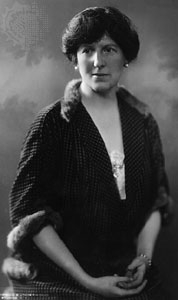
Alice Duer Miller was a member of Kappa Kappa Gamma and her writing skills took the suffrage movement by storm. She wrote poetry that had a huge impact on the movement and even wrote a column called, Are Women People? This column became a catchphrase for the suffrage movement. She followed that collection of columns with one called, Women Are People! Her illustrations and written works made her a known activist within the women’s suffrage movement and a pivotal voice in the U.S.

Photo Source:
 NPS.gov


Reverend Doctor Anna Howard Shaw

Reverend Doctor Anna Howard Shaw was a member of Kappa Alpha Theta. Shaw was one of the first female Methodist ministers in the United States. She met Susan B. Anthony in 1888, who encouraged her to join the National American Woman Suffrage Association (NAWSA). Her great work also led her to be the president of the NAWSA, where she and Anthony worked closely together to advocate for women’s rights throughout the movement. She also played a key role in the merging of two suffrage associations and this was the first time in decades that unity between organizations had happened within the suffrage movement.


Carrie Lane Chapman Catt


Photo Source:
Catt.org
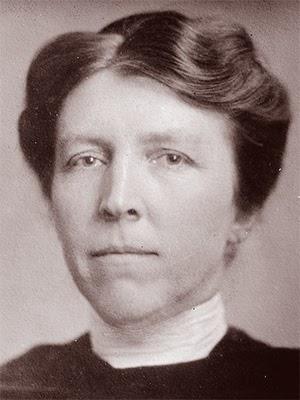
Carrie Lane Chapman Catt was a member of Pi Beta Phi and played a large role in the passage of the 19th Amendment and American women’s right to vote. It was Carrie who came up with what was known as the “Winning Plan” that coordinated state suffrage campaigns that lobbied for women’s rights, which helped ensure the development of the constitutional amendment. She helped found the League of Women Voters that gave women a platform and voice on political issues. Carrie was also the president of the National American Woman Suffrage Association from 1900 to 1904 and again from 1915 to 1920. She also wrote about the history of the suffrage movement that was published in 1923 called, Woman Suffrage and Politics: The Inner Story of the Suffrage Movement.


Dorothy Canfield Fisher, Ph.D.

Photo Source:
Franbecque.com


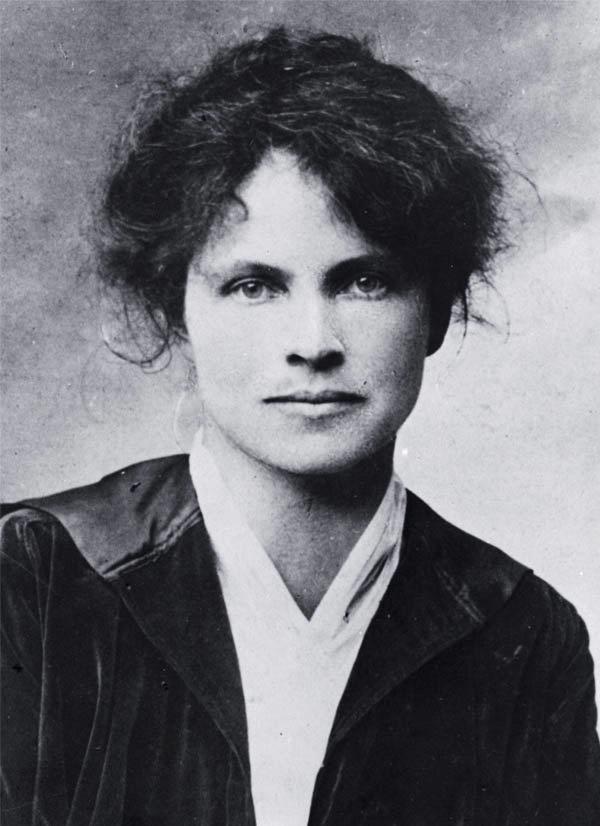
Dorothy Canfield Fisher, Ph.D., was a member of Kappa Kappa Gamma. She was a strong activist and voiced her support for women’s rights, racial equality and lifelong education through her activism. She even enlisted help from her sisters to aid in war-relief in France after World War I. After the war, she was head of the U.S. committee that allowed people to have the option to refuse to perform military service due to the freedom of thought, conscience or religion. Dorothy also worked for years trying to improve education reform and worked closely with the women’s prisons to do so. 


Edith and Grace Abbot


Photo Source:
Geni.com

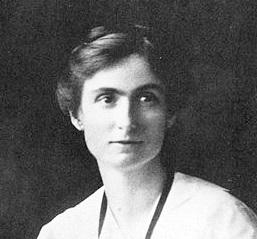
Edith and Grace Abbott, two sisters who were both members of Delta Gamma and each had a tremendous impact on the suffragist movement. Edith became the first woman to become dean of an American graduate school. She was committed to advocating for social reform and welfare and spent a lot of her time doing so. She and Grace both moved to what was known as the Hull House, which was a community for educated women with scholarly and revolutionary thinking. Grace wrote and published a number of scholarly articles and government reports that contributed to women’s rights. 


Photo Source:
Plainshumanities.edu
Grace Abbott, like her sister Edith, strove to advocate for women’s rights and improving children’s welfare, especially those who were immigrants. She was also the highest-ranking woman in the U.S. government for over a decade as the head of the U.S. Children’s Bureau. Grace became the first woman to be nominated and to hold a presidential cabinet position for the Secretary of Labor. A lot of her research and works were used in helping to make policies involving child labor laws across the United States.


Photo Source:
Franbecque.com

Eliza Jean Nelson Penfield 


Eliza Jean Nelson Penfield was a member of Kappa Kappa Gamma, who also served as Kappa Kappa Gamma’s president. She worked alongside Carrie Lane Chapman Catt to found the League of Women Voters. But, her push for the 19th Amendment didn’t stop there, as she was one of the seven women who chartered the Woman’s Suffrage Party of Greater New York. 


Photo Source:
Franceswillardhouse.org

Frances Willard 

Frances Willard was another suffragist who was a member of Alpha Phi, and like Eliza Jean Nelson Penfield, held the president position. Frances was also the president of the Woman’s Christian Temperance Union (WCTU). Before she was elected president of the WCTU, she became the first corresponding secretary for the organization. She spent endless amounts of her time traveling to speak and give lectures advocating for women’s suffrage and home protection. Frances also helped found the World WCTU in 1888 and became the president just five years later. 


Mary Ritter Beard 


Photo Source:
Franbecque.com

Mary Ritter Beard, who was a member of Kappa Alpha Theta. She was a leader and activist in many areas such as education and women’s rights. Mary was a member of the Women’s Trade Union League, the Equality League of Self-Supporting Women, the New York Suffrage Party and the Wage-Earners’ Suffrage Party. On top of her long list of involvement, she was also on the advisory board of the Congressional Union for Woman Suffrage, also known as the National Women’s Party. 


All of these women and many others made endless contributions towards women’s rights and what led to the 19th Amendment. They created a platform and even used their resources as sorority women to voice their thoughts and make a change in the world. They are an inspiration to women today on how you can make the world a better place, or at least your part of it. 


*The National Panhellenic Conference recognizes the 19th Amendment didn’t expand the right to vote to all women, but as women’s-only organizations we want to highlight the role our members played in the amendment’s passage and acknowledge it was a significant first step for all our members.

Tuesday, August 11, 2020

From the NPC Chairman: We hear you and we are listening.

Dear friends,

We hear you and we are listening. Topics of diversity, equity, inclusion (DEI) and access have been an integral part of NPC’s strategic conversations, but the importance of these topics on college campuses and among our members have supported our need to shift from conversation to action. This work is not easy, and steering a ship with 26 member organization in it, each with different perspectives, sometimes may seem slow and awkward, but it is a challenge we are undertaking with sensitivity, humility and diligence.
 
As you may be aware, the NPC Board of Directors has appointed an NPC Access and Equity Advisory Committee, which will provide us with recommendations and guidance on increasing access to the sorority experience and equity across policies and procedures. This will include consideration of norms and practices that create barriers facing potential members based on racial identity, ethnicity, LGBTQ identity, religious beliefs, ability and socioeconomic status, among others. The committee’s work will complement efforts led at the NPC member organizational level regarding membership policies, programming and practices.

Committee members represent a range of identities – based on race, ethnicity, religion, age and ability – and also represent varied Greek-letter organizations. Their insights and perspectives will be critical as we make ours a community in which all women can engage as their full selves. View the committee announcement.

 
As this group begins its work, the Board of Directors and committee members will host a series of listening sessions in August with various NPC constituencies including College Panhellenic leaders, fraternity/sorority advisors, collegiate members and alumnae regarding access and equity. This is the first step in our journey to drive real change that reinforces the foundational values and strength of the Panhellenic experience.

In addition to the work of the committee, NPC has engaged the Cross-Cultural Fraternal Advising Institute Collaborative team to facilitate a virtual education session for collegiate sorority members titled “Cultivating a More Inclusive Recruitment Experience and Addressing Implicit Bias.” More than 470 participants are now better positioned to act with integrity across all aspects of membership growth, development and experiences. Soon, we will share the recording and a resource guide with all College Panhellenics so those who could not attend live will have the opportunity to benefit.

NPC leadership will also continue to engage with experts in the field of diversity, equity, inclusion and access to increase their knowledge of DEI factors and set a common language and framework for NPC’s DEI initiatives.

Moreover, NPC will continue to engage its other advisory groups – the Fraternity/Sorority Advisors Advisory Committee and the Student Advisory Committee – to provide their input and feedback related to NPC’s actions regarding diversity, equity, inclusion and access.

To report on the progress of NPC’s commitment to diversity, equity and inclusion, including the work of the Access and Equity Advisory Committee, a new page has been added to our
 website.

As we continue our work in creating greater equity within and access to the sorority experience, difficult and meaningful conversations are taking place and new resources are being developed for our College Panhellenics. It is important work that will assist us in confronting racism and considering the structural and systemic reasons that too many women do not view our organizations as places where they feel welcomed, understood or heard.

During a conversation the Board of Directors had with Syreeta Greene, MSW, Ed.D., director of the Office of Equity, Inclusion and Multicultural Affairs, Midwestern State University, she stated, “The road to diversity, equity and inclusion is a journey not a destination.” NPC is committed to that journey.


Panhellenically,


Carole J. Jones
NPC Chairman

Perspectives: What Sorority Means to Me

Sororities have always been a place for women to gather, build friendships, support academic pursuits, develop leaders and provide a sense of belonging. As the needs of women have changed, sorority has adapted to fit those needs. Today, while class instruction and the sorority experience may look and feel different on many campuses due to COVID-19, sorority is adapting to provide these benefits and the opportunity for real, personal connections through a virtual experience. Through it all, sisterhood and the benefits of the sorority experience remain.

Here are some of those benefits as voiced by collegiate members:

"My sorority helped me turn my college campus into a place that I can call home. These women started as strangers and are now some of my closest friends in the world. And, I know I can look to them to help in every aspect of my life – from academics to life advice." 
-Patricia, Tulane University (in a Her Campus/TheSororityLife.com Instagram story video)


"One of the things that I have loved most about being in my chapter has been the support system. More specifically, my sorority family has been my best support system ... These women are always here for me when I’m feeling down, need advice or just want someone to talk to and have made me feel at home, while being so far from home."
-Bridget, University of Tennessee-Knoxville (full story)

"I was worried about losing that connection with my sisters when we left campus (in spring 2020 due to the pandemic). But, I’ve found a new appreciation for our sisterhood. Sisterhood is in the little things. The texts, the FaceTime calls and the memories we create together make me that much more grateful to have my sisters in my life!"
-Bri, NPC intern for TheSororityLife.com (full story)